

IT Band Syndrome Treatment in Brooklyn for Runners & Active Adults
If you’re searching for IT band syndrome treatment in Brooklyn, you may be experiencing sharp or burning pain on the outside of the knee that worsens with walking downhill, running, squatting, or prolonged activity.
Lateral knee pain from IT band syndrome can limit running, disrupt training, and keep coming back if not properly addressed.
At Form & Function Chiropractic in Brooklyn, treatment focuses on reducing pain, restoring strength, and correcting the underlying cause — not just temporary relief.

What Is IT Band Syndrome (ITBS)?
IT band syndrome is an overuse injury that causes pain along the outside of the knee, most commonly in runners and endurance athletes.
The iliotibial band is a thick band of connective tissue that runs along the outside of the thigh. During repetitive movement like running, it can become irritated due to excessive load and compression at the knee.
This is not simply a “tight band” problem — it is a load management and movement issue.
Why IT Band Pain Keeps Coming Back
Most treatments fail because they focus only on symptoms — not the cause.
IT band syndrome commonly returns when:
hip strength and control are not addressed
running mechanics remain inefficient
training volume increases too quickly
underlying movement limitations are ignored
If you don’t change how the load is applied, the pain will return.
What Causes IT Band Syndrome?
IT band syndrome develops from a combination of factors, not a single issue.
Common contributors include:
weak or poorly controlled hip musculature
excessive pelvic drop during running
poor stride mechanics
sudden increases in mileage or intensity
downhill running or repetitive loading patterns
Understanding these factors is essential for long-term resolution.
Common Symptoms of IT Band Syndrome
pain on the outside of the knee
discomfort that worsens with running
pain after a certain distance or time
tenderness along the outer thigh or knee
symptoms that improve with rest but return quickly
Pain is often predictable — and that predictability is key to treatment.

Why Rest, Stretching, and Foam Rolling Aren’t Enough
While these methods may provide temporary relief, they do not address the underlying cause of IT band syndrome.
The IT band itself is not easily “stretched,” and focusing only on soft tissue work ignores the real issue:
👉 how your body is loading during movement
Long-term improvement requires:
strength
control
proper loading
progressive return to activity
How We Treat IT Band Syndrome in Brooklyn
Treatment is built around a multi-layered, regenerative and load-based approach — designed to reduce pain, restore function, and prevent recurrence.
Rather than relying on a single method, care combines advanced technologies with targeted rehabilitation to address both symptoms and underlying cause.
Regenerative Therapy & Advanced Modalities
We use a combination of evidence-based technologies to help reduce pain, improve tissue response, and accelerate recovery:
Shockwave Therapy (Focused & Radial Pressure Wave)
Shockwave therapy delivers mechanical energy into the affected tissues to:
reduce pain sensitivity
improve circulation
stimulate tissue remodeling
Both focused shockwave and radial pressure wave therapy are used depending on the depth and presentation of symptoms.
EMTT (Extracorporeal Magnetotransduction Therapy)
EMTT uses high-frequency electromagnetic fields to:
support cellular activity
improve tissue healing response
reduce inflammation
This is often combined with shockwave therapy for a more comprehensive regenerative effect.
Laser Therapy (Photobiomodulation)
Laser therapy helps enhance recovery by:
improving cellular energy production
reducing inflammation
supporting tissue repair
It is used to complement other treatments and improve overall healing efficiency.
Functional Range Conditioning (FRC®) & Load-Based Rehabilitation
While modalities help reduce pain, long-term recovery depends on how your body handles load.
Rehabilitation focuses on:
hip and glute strength
joint control and mobility
single-leg stability
movement quality
Using Functional Range Conditioning (FRC®) principles, treatment improves joint function and control to reduce stress on the IT band.
Biomechanics & Return-to-Run Progression
Returning to running too quickly is one of the most common reasons IT band pain comes back.
Treatment includes guidance on load management, running mechanics, and progression, ensuring you rebuild tolerance without re-irritating the tissue.
A structured return-to-run program is introduced at the right time to restore confidence, performance, and consistency.
The goal is not just to relieve pain — it’s to restore capacity, improve performance, and prevent the problem from coming back.
Return-to-Running Strategy and Load Progression
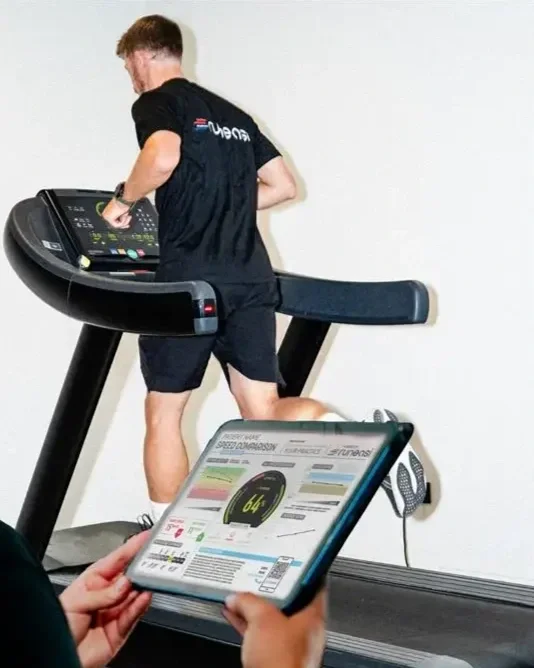
Many running injuries are influenced by stride mechanics, cadence, terrain exposure, and training progression.
When appropriate, biomechanical running gait analysis and individualized return-to-running coaching may be incorporated to help improve load tolerance and reduce reinjury risk.
👉 Explore our running gait analysis and performance coaching services
Frequently Asked Questions About IT Band Syndrome
-
IT band syndrome (ITBS) is an overuse injury that causes pain on the outside of the knee, most commonly in runners and endurance athletes. It occurs when the iliotibial band becomes irritated as it repeatedly loads during running and other activities.
-
Most cases of IT band syndrome return because the underlying cause isn’t addressed.
This often includes:
poor hip strength and control
faulty running mechanics
improper load progression
Without correcting these factors, symptoms tend to recur.
-
Not exactly.
While it may feel “tight,” current research suggests IT band syndrome is more related to compression and load on sensitive tissues, not simply tightness.
This is why stretching alone is rarely enough.
-
The most effective treatment is a progressive, load-based rehabilitation program that includes:
✔ hip and glute strengthening
✔ movement retraining
✔ gradual return to running
✔ activity modificationWhere Regenerative Therapy Fits In
Modalities such as:
can help reduce pain, improve tissue response, and accelerate recovery — especially in more persistent cases.
-
Many cases improve within 4–6 weeks, though full recovery can take longer depending on severity and consistency of rehab.
Returning too quickly often leads to recurrence.
-
Not always.
In some cases, running volume or intensity needs to be modified—not completely stopped. The goal is to reduce irritation while maintaining capacity, then gradually return to full training.
-
Foam rolling the IT band directly is generally not effective.
The IT band is a dense connective tissue that does not significantly change length or structure with rolling. Applying pressure directly to it often does not improve mobility or blood flow and can sometimes aggravate symptoms.
What to Do Instead
Focus on foam rolling the surrounding muscles that influence tension and load on the IT band:
quadriceps
glutes
tensor fasciae latae (TFL)
This can help improve circulation, reduce muscle tone, and support better movement.
Long-term improvement comes from:
strength
control
load management
—not just passive techniques.
-
Shockwave therapy and EMTT may help reduce pain and improve tissue response in some cases, but it works best when combined with a structured rehabilitation program—not as a standalone treatment but in conjunction with a progressive rehabilitation and movement retraining.
-
Weakness or poor control of the hip muscles increases stress on the IT band during running.
Strengthening the hip has been shown to improve outcomes and reduce symptoms in individuals with ITBS.
-
Return to running should be gradual and based on:
pain levels
strength improvements
movement quality
A structured return-to-run program is key to avoiding setbacks.
-
Our approach focuses on:
✔ identifying the true cause (not just symptoms)
✔ reducing pain with targeted therapies
✔ restoring strength and movement
✔ progressing load safely
✔ guiding return to runningThe goal is not just pain relief — it’s long-term resolution and performance.
Start Your Recovery from IT Band Pain
Stop managing symptoms and start addressing the cause.
A structured, data-driven approach can help you recover faster, reduce recurrence, and return to running with confidence.