

Stress Fracture Treatment in Brooklyn for Runners and Active Individuals
Stress fractures develop when repetitive loading exceeds the bone’s ability to recover and remodel. These injuries often occur in runners, athletes, and active individuals during periods of rapid training progression, biomechanical overload, or reduced tissue recovery capacity.
Early diagnosis and structured treatment are critical. Without appropriate load management and rehabilitation, stress reactions can progress to true fractures, prolonging recovery and increasing recurrence risk.
Stress fracture treatment at Form & Function Chiropractic focuses on protecting healing bone tissue, restoring load tolerance, and guiding a safe return to running or sport.
Understanding Bone Stress Injuries
Stress fractures exist along a spectrum from early bone stress reaction to structural fracture. These injuries develop when repetitive loading exceeds the bone’s ability to remodel and recover.
Common contributing factors include:
• rapid mileage increases
• training intensity spikes
• surface changes
• strength deficits
• biomechanical overload
• nutritional or recovery factors
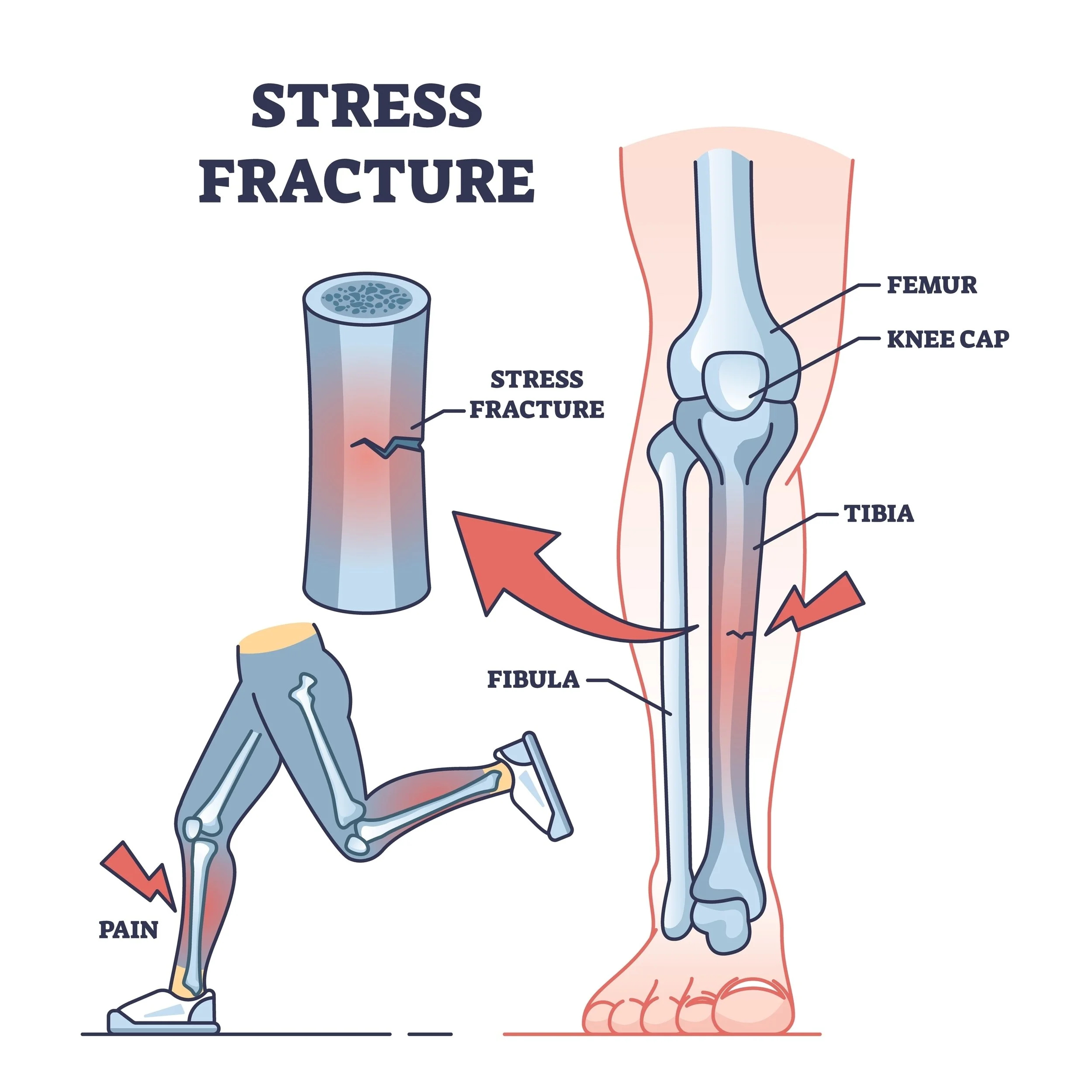
Common Stress Fracture Symptoms
• localized bone pain that worsens with impact
• pain during or after running
• tenderness at a specific point
• symptoms that improve with rest but return quickly
• reduced performance tolerance
When Imaging May Be Needed
Persistent focal pain, worsening symptoms, or inability to tolerate normal walking loads may require MRI evaluation to rule out advanced bone stress injury.
Precision Regenerative Treatment and Return-to-Running Strategy
Bone stress injuries develop when repetitive mechanical loading exceeds the body’s ability to repair and remodel tissue. Effective treatment therefore requires addressing both biological healing capacity and movement-based loading patterns.
At Form & Function Chiropractic, stress fracture management follows a structured multimodal approach designed to protect healing bone tissue while progressively restoring impact tolerance.
Focused Extracorporeal Shockwave Therapy
Focused shockwave may be incorporated in selected cases to deliver targeted mechanical stimulation to chronically overloaded bone and connective tissue structures. This stimulation may influence pain sensitivity, local circulation, and biological signaling associated with tissue repair.
EMTT (Extracorporeal Magnetotransduction Therapy)
High-energy electromagnetic stimulation may be integrated to support cellular metabolism and regenerative signaling within slow-healing connective tissue and bone stress conditions. When combined with mechanical treatment strategies, EMTT enhances the overall biological recovery environment.
Photobiomodulation Therapy
Laser therapy using red and near-infrared wavelengths may assist inflammatory modulation, circulation support, and symptom reduction — helping improve tolerance to progressive rehabilitation strategies.
Progressive Strength and Load Capacity Development
Rehabilitation emphasizes restoring:
• calf complex strength
• intrinsic foot stability
• hip and lower limb force control
• graded bone loading tolerance
These strategies help re-establish the ability to safely tolerate walking, standing, and running demands.
Running Gait Analysis and Structured Return-to-Running Progression
Following initial protection phases, return to running is guided by both tissue healing response and biomechanical assessment.
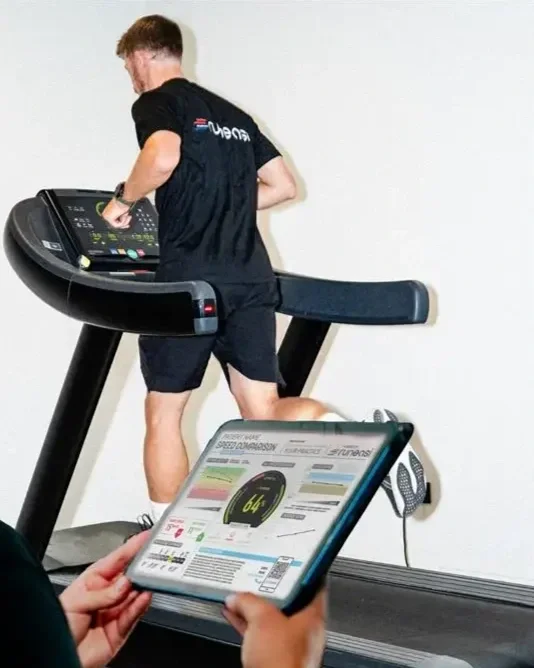
Running analysis using motion technology may be incorporated to evaluate stride mechanics, cadence patterns, loading symmetry, and impact control strategies that influence tibial and foot stress.
A staged return-to-running framework may include:
• walk-run interval progression
• gradual weekly load increases
• terrain and footwear management
• cadence and efficiency adjustments
• strength and tissue tolerance monitoring
This integrated strategy helps reduce recurrence risk while supporting long-term performance and injury resilience.
Return-to-Running Strategy and Load Progression
Many running injuries are influenced by stride mechanics, cadence, terrain exposure, and training progression.
When appropriate, biomechanical running gait analysis and individualized return-to-running coaching may be incorporated to help improve load tolerance and reduce reinjury risk.
👉 Explore our running gait analysis and performance coaching services
Frequently Asked Questions About Stress Fractures (BSI’s)
-
A stress fracture is a small crack in bone caused by repetitive loading that exceeds the bone’s ability to recover and remodel.
-
They commonly occur during rapid increases in mileage, intensity, terrain changes, or when muscular fatigue reduces shock absorption capacity.
-
Healing requires activity modification and medical guidance. Most cases improve with conservative management and progressive rehabilitation.
-
Many stress fractures require approximately 6–8 weeks of protected loading before return to higher-impact activity is considered.
-
Running is usually reduced or temporarily stopped to protect healing bone tissue and prevent progression of the injury. Continuing high-impact loading too early can delay recovery or increase the risk of a more significant fracture.
Many individuals can maintain fitness through low-impact cross-training strategies such as cycling, pool running, or strength training while bone healing occurs. A structured rehabilitation and return-to-running progression is then introduced gradually based on symptom response, injury severity, and functional capacity.
-
MRI is often recommended when symptoms are persistent, focal, or worsening, as early stress injuries may not appear on standard X-rays.
-
Focused shockwave may be used in selected cases to influence pain sensitivity and tissue response around chronically overloaded bone structures.
-
EMTT may support cellular metabolism and biological repair processes in slow-healing connective tissue and bone stress conditions.
-
Yes. Recurrence risk increases if training errors, strength deficits, or biomechanical contributors are not addressed.
-
Gradual training progression, strength development, mobility work, nutrition optimization, and biomechanical assessment can help reduce risk.
Don’t Let a Stress Fracture Delay Your Return to Running
Bone stress injuries can worsen when repetitive loading continues without structured management. Early evaluation and progressive rehabilitation can help protect healing tissue, restore strength, and guide a safe return to impact activity.
Schedule your stress fracture evaluation at Form & Function Chiropractic in Brooklyn to begin a clear recovery and return-to-running strategy.
Your visit may include:
injury severity and loading assessment
rehabilitation and strength planning
training modification guidance
return-to-run timeline discussion