

EMTT Therapy in Brooklyn, NY
If you are dealing with persistent pain, a slow-healing injury, or tissue irritation that has not responded fully to rest, exercise, or standard treatment, Extracorporeal Magnetotransduction Therapy may help accelerate recovery.
At Form & Function Chiropractic, EMTT is used as part of a comprehensive treatment approach for musculoskeletal injuries, overuse conditions, and chronic pain presentations. EMTT is a non-invasive regenerative therapy that uses high-energy electromagnetic pulses to stimulate cellular activity and support the body’s healing response.
This treatment is often used for patients with stubborn pain, tendon and joint problems, and injuries that need more than temporary symptom relief.
What Is Extracorporeal Magnetotransduction Therapy (EMTT)?
Extracorporeal Magnetotransduction Therapy (EMTT) is an advanced non-invasive regenerative treatment that uses high-energy electromagnetic pulses to stimulate healing processes within injured or painful musculoskeletal tissues.
The term “extracorporeal” means the energy is delivered from outside the body, without injections or surgery. “Magnetotransduction” refers to how electromagnetic signals influence cellular activity and biological repair mechanisms.
EMTT is commonly used in sports medicine, orthopedic rehabilitation, and regenerative treatment programs for patients dealing with chronic pain, tendon injuries, joint irritation, and slow-healing soft tissue conditions.
How Extracorporeal Magnetotransduction Therapy Works
During EMTT treatment, high-frequency electromagnetic pulses are delivered into the affected tissue. These pulses interact with cells and may help:
improve cellular metabolism
support tissue repair processes
reduce inflammation
decrease pain sensitivity
enhance recovery in chronic or overloaded tissues
Unlike treatments that focus only on short-term symptom relief, EMTT is designed to help improve the biological environment needed for healing.
This is why EMTT is often integrated into a broader rehabilitation plan that includes progressive loading, movement correction, and regenerative therapies such as extracorporeal shockwave therapy.
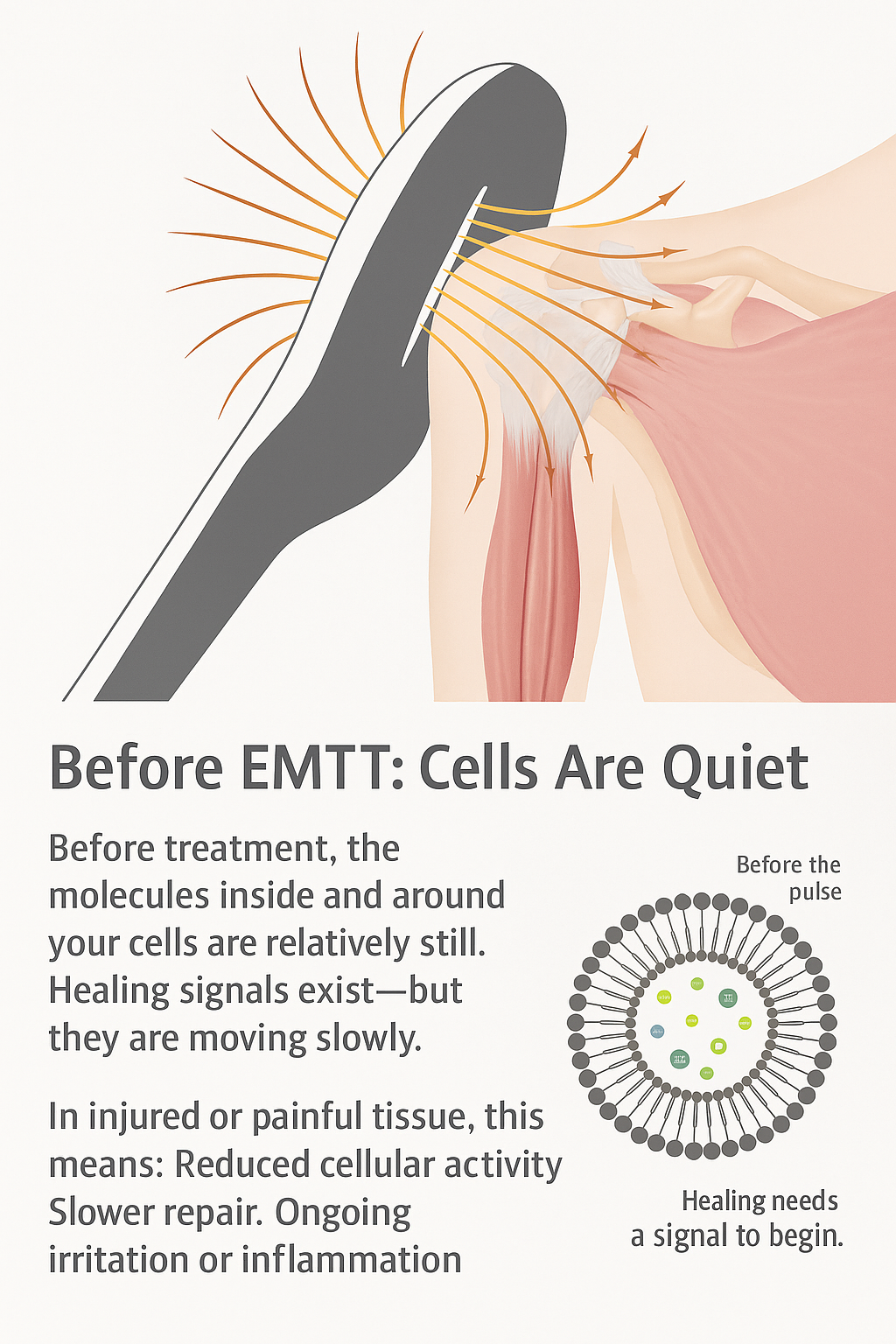
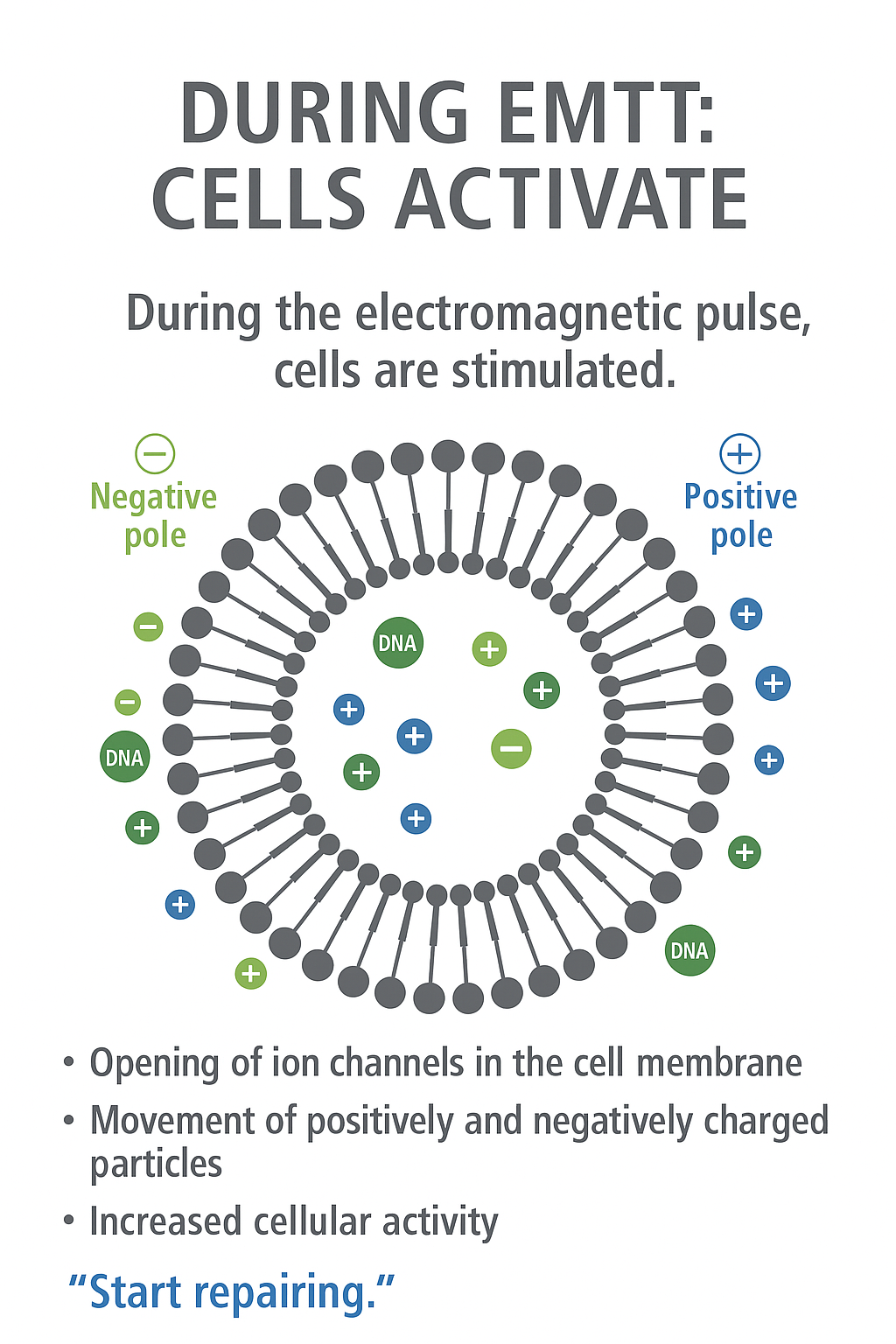
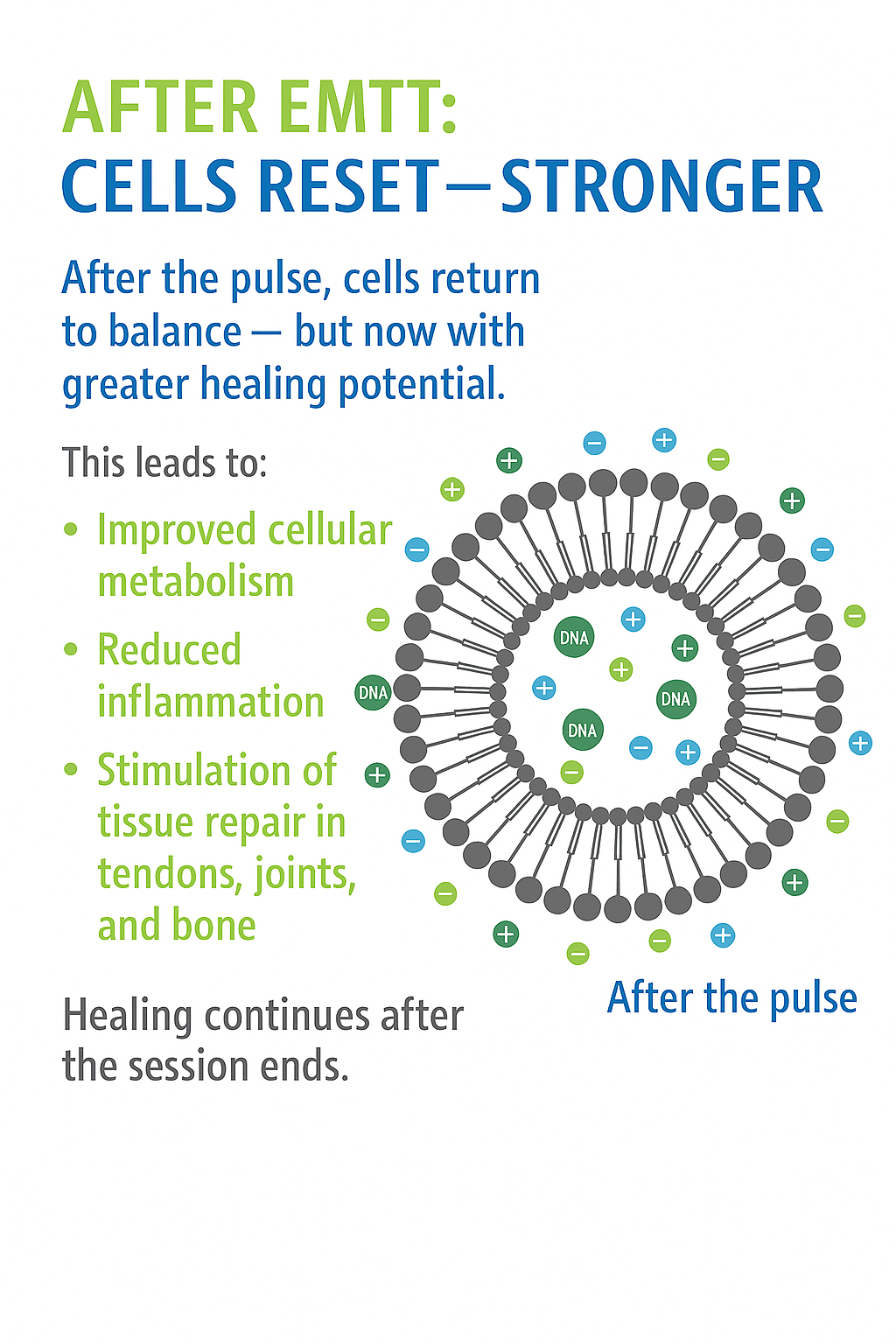
What Happens in Your Tissue During EMTT
-
![An illustration showing a comparison of cells before and after EMTT treatment, depicting cells as steady and quiet before treatment and showing a diagram of cellular signals and healing processes.]()
Before The Pulse
-
![Diagram illustrating how cells activate during electromagnetic pulses, showing DNA, positive, and negative poles with ion channels.]()
During The Pulse
-
![Diagram illustrating the effects of EMTT treatment on cells, showing DNA inside a cell with positive, negative, and neutral ions surrounding it. Title states 'After EMT: Cells Reset - Stronger' and explains the benefits of the treatment, including improved cellular metabolism, reduced inflammation, and enhanced tissue repair.]()
After the Pulse
Conditions Treated With Extracorporeal Magnetotransduction Therapy
Extracorporeal Magnetotransduction Therapy may be recommended for a range of musculoskeletal and sports-related conditions, particularly those involving tendon overload, chronic irritation, or delayed tissue healing such as:
Osteoarthritis-related joint pain
Sports Injuries
Overuse Injuries
Tendon Irritation
Slow-healing soft tissue conditions
If you are unsure whether your specific condition may benefit from Extracorporeal Magnetotransduction Therapy, a clinical evaluation can help determine whether this treatment is appropriate.
Extracorporeal Magnetotransduction Therapy for Chronic Pain and Injury Recovery
Some musculoskeletal conditions become chronic because the tissue environment is no longer functioning efficiently. Healing slows, inflammation persists, and movement becomes limited or painful.
Extracorporeal Magnetotransduction Therapy can help support recovery by improving the biological conditions needed for tissue repair. It is especially useful for individuals seeking a non-invasive alternative to injections or surgical intervention.
At Form & Function Chiropractic, Extracorporeal Magnetotransduction Therapy is integrated into individualized treatment programs that may also include:
movement assessment
load management strategies
mobility and stability training
progressive strengthening
shockwave therapy
return-to-sport or return-to-activity planning
This comprehensive approach is designed to reduce recurrence and improve long-term outcomes.
What to Expect During Extracorporeal Magnetotransduction Therapy Treatment
Extracorporeal Magnetotransduction Therapy sessions are straightforward and efficient.
During treatment:
the painful or injured area is evaluated
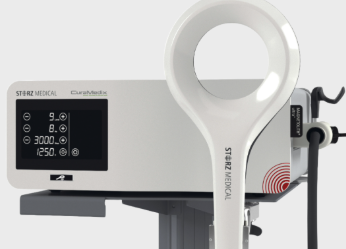
the electromagnetic applicator is positioned over the target tissue
high-energy pulses are delivered for several minutes
additional therapies or exercises may be performed depending on your treatment plan
Most patients tolerate Extracorporeal Magnetotransduction Therapy well. The treatment is non-invasive and typically requires no downtime, allowing patients to return to normal daily activities the same day.
The number of sessions recommended depends on the condition being treated, symptom duration, tissue irritability, and overall rehabilitation goals.
Benefits of Extracorporeal Magnetotransduction Therapy
Potential benefits include:
non-invasive treatment
no injections or surgical procedures
minimal or no downtime
support for tissue healing
reduced pain and inflammation
useful for chronic or stubborn injuries
can be combined with rehabilitation and regenerative therapies
may help patients avoid more invasive treatment options
Extracorporeal Magnetotransduction Therapy is particularly appealing for active individuals who want to continue moving while addressing the underlying causes of pain.
Extracorporeal Magnetotransduction Therapy vs Shockwave Therapy
Extracorporeal Magnetotransduction Therapy and shockwave therapy are different regenerative treatments that may be used independently or in combination.
Shockwave therapy uses acoustic pressure waves to stimulate tissue remodeling and healing responses.
Extracorporeal Magnetotransduction Therapy uses electromagnetic pulses to influence cellular activity and support tissue recovery.
Combining these therapies can provide a more comprehensive regenerative stimulus in certain chronic or complex injuries.
Treatment recommendations are based on clinical findings, injury history, tissue tolerance, and patient goals.
Why Choose Form & Function Chiropractic for Extracorporeal Magnetotransduction Therapy in Brooklyn
Treatment at Form & Function Chiropractic focuses on more than short-term symptom relief.
Care is designed to address:
the injured tissue
the mechanical factors contributing to pain
movement limitations
loading patterns
rehabilitation progression
long-term injury prevention
Extracorporeal Magnetotransduction Therapy is used within structured treatment plans that aim to improve recovery efficiency, restore function, and support a confident return to activity.
This approach is especially valuable for runners, athletes, and active adults dealing with recurring or persistent musculoskeletal conditions.
Frequently Asked Questions About Extracorporeal Magnetotransduction Therapy
-
Extracorporeal Magnetotransduction Therapy is a non-invasive regenerative treatment that uses high-energy electromagnetic pulses to stimulate biological healing processes in musculoskeletal tissue. It is commonly used for chronic tendon injuries, joint pain, overuse conditions, and sports-related injuries.
-
No. While both therapies use electromagnetic energy, Extracorporeal Magnetotransduction Therapy delivers significantly higher-energy pulses and is designed to stimulate deeper biological responses in injured tissue. PEMF devices typically operate at lower energy levels and are often used for general wellness or home therapy. EMTT is commonly integrated into structured rehabilitation programs.
Patients often ask whether Extracorporeal Magnetotransduction Therapy is similar to pulsed electromagnetic field therapy. You can read a detailed comparison in Dr. Patane’s blog post on PEMF vs Extracorporeal Magnetotransduction Therapy.
-
Treatment frequency depends on the condition being addressed, how long symptoms have been present, tissue tolerance, and overall rehabilitation strategy.
Within multimodal regenerative care plans, patients often undergo a series of approximately six structured treatment visits that may combine shockwave therapy (radial EPAT or focused ESWT) with Extracorporeal Magnetotransduction Therapy. Depending on clinical response, an additional standalone Extracorporeal Magnetotransduction Therapy session may also be incorporated during this period.
When used independently, Extracorporeal Magnetotransduction Therapy is commonly delivered around two times per week for several weeks to support tissue healing and functional improvement. Treatment plans are individualized and may be modified based on progress and activity goals.
-
The electromagnetic portion of treatment is typically brief. Total appointment time may vary depending on whether Extracorporeal Magnetotransduction Therapy is combined with other therapies such as shockwave treatment, rehabilitation exercises, or movement assessment.
-
Extracorporeal Magnetotransduction Therapy is non-invasive and usually requires little to no downtime. Most patients can return to normal daily activity the same day unless specific activity modifications are recommended.
-
Most patients tolerate Extracorporeal Magnetotransduction Therapy very well. Sensations during treatment can vary depending on the area being treated and individual tissue sensitivity.
Most patients describe the sensation as unusual rather than painful.
Certain regions of the body — such as the shoulder, sacroiliac (SI) joint, or Achilles tendon — are often more sensitive and patients may feel a noticeable pulsing or deep stimulation during treatment. In other areas, or in individuals with lower sensitivity, the therapy may be only mildly perceptible or not strongly felt at all.
Extracorporeal Magnetotransduction Therapy is non-invasive and does not involve injections or surgical procedures. Treatment intensity can be adjusted to maintain comfort while still supporting therapeutic goals.
-
Yes. In most cases, Extracorporeal Magnetotransduction Therapy is combined with shockwave therapy — including radial shockwave therapy (EPAT) or focused shockwave therapy (ESWT) — particularly during the initial phase of a multimodal regenerative treatment approach.
These therapies influence tissue healing through different physiological mechanisms and may be used together to provide a more comprehensive stimulus for recovery in chronic or complex musculoskeletal conditions.
Treatment recommendations depend on the specific injury, tissue response, activity goals, and overall rehabilitation strategy. In some situations, Extracorporeal Magnetotransduction Therapy may also be used as a standalone treatment when clinically appropriate.
-
Treatment cost depends on the condition being treated, the number of areas involved, and whether Extracorporeal Magnetotransduction Therapy is used as a standalone treatment or combined with other regenerative therapies and rehabilitation.
In general, standalone Extracorporeal Magnetotransduction Therapy sessions are typically around $100 per visit. In many cases, treatment is provided as part of a structured regenerative care program that may include radial shockwave therapy (EPAT), focused shockwave therapy (ESWT), and progressive rehabilitation. When included within a comprehensive treatment package, the cost of individual Extracorporeal Magnetotransduction Therapy sessions may be incorporated into the overall program.
Structured regenerative treatment plans are designed to address both pain and underlying tissue dysfunction in order to support longer-term recovery and reduce recurrence risk.
A clinical evaluation helps determine the most appropriate treatment approach and overall program structure based on your condition and recovery goals.
-
Patients experiencing chronic pain, tendon injuries, sports injuries, overuse conditions, or slow-healing musculoskeletal tissue may benefit from this treatment. A clinical evaluation is recommended to determine whether Extracorporeal Magnetotransduction Therapy is appropriate.
-
Return-to-activity recommendations depend on the condition being treated, symptom severity, and the overall rehabilitation plan.
Many patients are able to continue modified training while undergoing Extracorporeal Magnetotransduction Therapy. Running or exercise is often permitted as long as the activity is not significantly increasing pain, worsening symptoms, or delaying tissue healing. Training volume, intensity, or frequency may be temporarily adjusted to support recovery.
In some cases, a structured running analysis or movement assessment may be recommended to help identify loading patterns or biomechanical factors that contributed to the injury. Addressing these factors can support a safer and more confident return to running.
Progression back to full activity is guided by symptom response, tissue tolerance, and functional improvement.
The goal is usually to keep you moving while allowing the injured tissue to recover.
Schedule a Consultation for Extracorporeal Magnetotransduction Therapy in Brooklyn, NY
If you are looking for Extracorporeal Magnetotransduction Therapy in Brooklyn, Form & Function Chiropractic provides personalized treatment plans for pain relief, injury recovery, and rehabilitation.
Whether you are managing chronic pain, a sports injury, or a condition that has stopped improving, Extracorporeal Magnetotransduction Therapy may be an effective part of your recovery strategy.
Contact Form & Function Chiropractic today to schedule an evaluation and determine whether Extracorporeal Magnetotransduction Therapy is appropriate for your condition.