

Piriformis Syndrome Treatment in Brooklyn
What Is Piriformis Syndrome?
If you’re searching for piriformis syndrome treatment in Brooklyn, you may be experiencing deep pain in the buttock that sometimes radiates into the back of the thigh or leg.
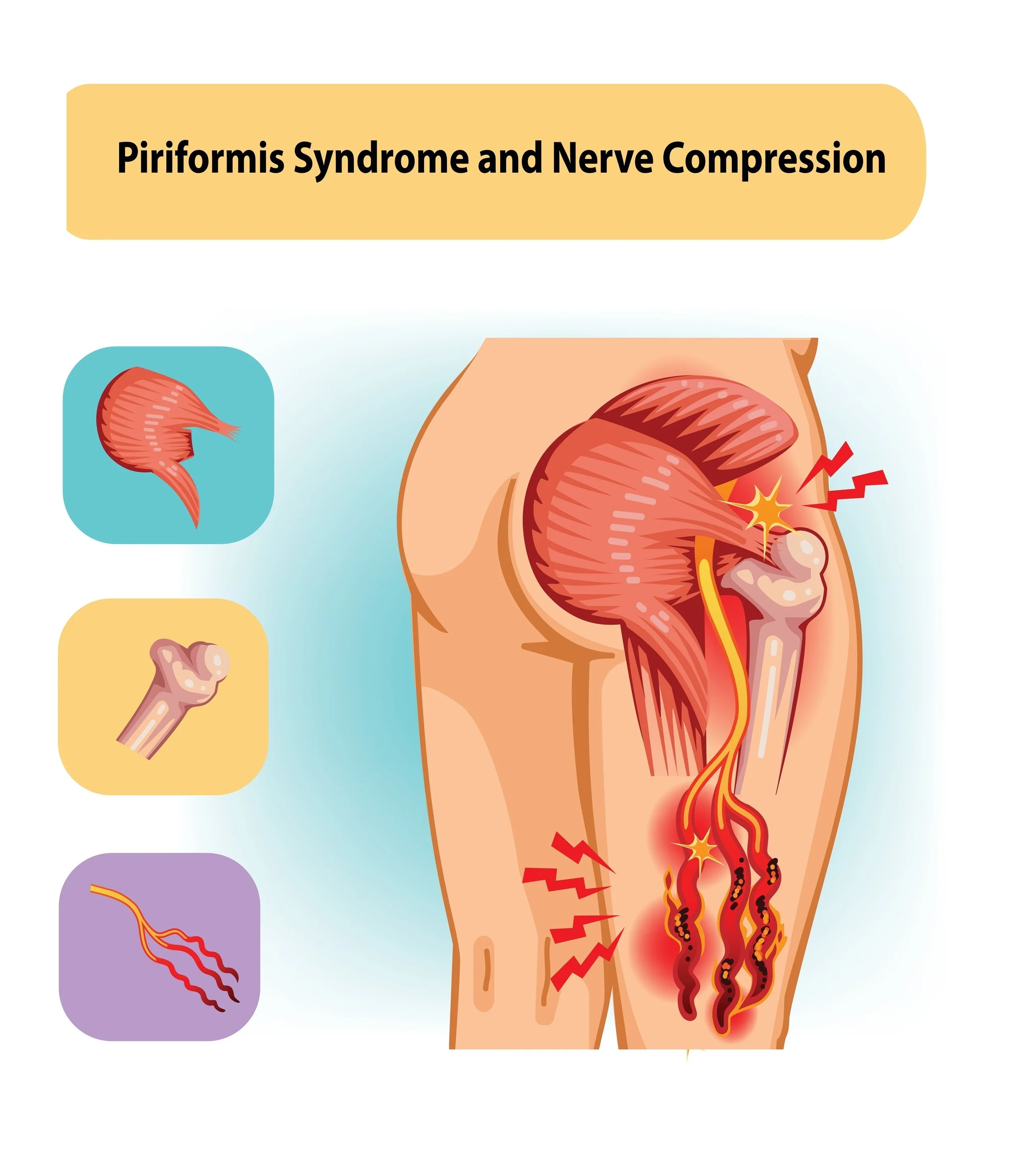
Piriformis syndrome occurs when the piriformis muscle, located deep within the gluteal region, irritates or compresses the sciatic nerve. Because the sciatic nerve passes directly beneath or sometimes through this muscle, tightness or inflammation in the piriformis can lead to nerve irritation.
This condition may cause symptoms that resemble sciatica, though the source of nerve irritation originates in the gluteal muscles rather than the spine.
Common contributing factors include:
prolonged sitting
running or repetitive lower body activity
gluteal muscle imbalance
sudden increases in physical load
previous lower back or hip injury
At Form & Function Chiropractic, we evaluate piriformis syndrome carefully to determine whether sciatic nerve irritation originates from the spine or the surrounding hip musculature. When appropriate, treatment incorporates a precision multimodal regenerative approach integrating extracorporeal shockwave therapy, EMTT, photobiomodulation therapy, and structured rehabilitation to restore normal tissue function.
Symptoms of Piriformis Syndrome
Symptoms often involve discomfort in the buttock and posterior thigh.
Common symptoms include:
deep buttock pain
pain when sitting for long periods
tenderness in the gluteal region
pain radiating down the back of the thigh
increased discomfort during running or stair climbing
reduced hip mobility
Symptoms may worsen with prolonged sitting or activities that load the hip muscles.
Piriformis Syndrome vs Sciatica
Piriformis syndrome and sciatica can produce similar symptoms but originate from different structures.
Piriformis Syndrome
nerve irritation within the gluteal region
localized buttock pain
symptoms often worsened by sitting
Sciatica (Lumbar Radiculopathy)
nerve compression in the spine
lower back pain often present
symptoms follow spinal nerve distribution
Proper evaluation helps determine whether nerve irritation originates from the spine or the piriformis muscle.

Piriformis Syndrome vs Hamstring Injury
Pain in the back of the thigh may also occur with hamstring injuries.
Piriformis Syndrome
pain deep in the buttock
nerve-related symptoms
tenderness in the gluteal muscles
Hamstring Strain
pain in the posterior thigh
discomfort during running or sprinting
localized muscle tenderness
Accurate diagnosis helps guide the most effective treatment.

Precision Multimodal Regenerative Treatment in Brooklyn
At Form & Function Chiropractic, we utilize a precision multimodal regenerative strategy tailored to the tissues contributing to sciatic nerve irritation.
Focused extracorporeal shockwave therapy may be applied to the piriformis and surrounding gluteal tissues to promote biological signaling and improve tissue function.
Radial shockwave may be used to address larger muscular regions of the gluteal and hip musculature to reduce regional overload.
EMTT is integrated into every regenerative protocol to enhance cellular metabolism and complement mechanical stimulation.
Photobiomodulation Therapy (Meditech Bioflex Laser)
Laser therapy may be incorporated to support tissue recovery and help reduce inflammation and nerve irritation.
Movement & Rehabilitation
Treatment is paired with progressive rehabilitation focusing on:
gluteal muscle strength
hip mobility
pelvic stability
return to running or activity
Why Piriformis Syndrome Develops
Common contributing factors include:
prolonged sitting
poor gluteal muscle activation
running biomechanics
sudden increases in training volume
previous lower back or hip injury
Addressing these factors helps reduce recurrence.
When Imaging Is Necessary
Piriformis syndrome is typically diagnosed through clinical examination.
Imaging may be recommended when:
symptoms are severe or persistent
lumbar disc injury is suspected
neurological symptoms worsen
When clinically indicated, referral for advanced imaging such as MRI may be coordinated to evaluate spinal structures.
When Should You Seek Treatment?
You should seek evaluation if you experience:
persistent buttock pain
pain radiating down the leg
discomfort when sitting
symptoms interfering with activity
Early evaluation helps identify the source of nerve irritation and guide treatment.
Related Conditions
Piriformis syndrome may occur alongside:
hamstring strains
hip dysfunction
Frequently Asked Questions
Can piriformis syndrome cause sciatica?
Yes. The piriformis muscle can compress the sciatic nerve and produce symptoms similar to sciatica.
Can piriformis syndrome occur in runners?
Yes. Runners frequently develop piriformis irritation due to repetitive hip loading.
Can shockwave therapy help piriformis syndrome?
Shockwave therapy will help improve tissue responsiveness and support recovery when muscular compression contributes to nerve irritation.