

Ankle Tendon Pain Treatment in Brooklyn for Runners and Active Adults
Ankle Tendon Pain That Won’t Go Away?
If your ankle pain keeps coming back every time you run, it’s usually not just “inflammation” — it’s a load capacity problem in the tendon that hasn’t been properly rebuilt.
Most runners are told to:
rest (temporary relief)
stretch (often not enough)
use orthotics (don’t fix tendon capacity)
…but never actually restore the tendon’s ability to tolerate running.
That’s why it keeps coming back.
At Form & Function Chiropractic, we identify exactly which tendon is involved and why it’s failing under load, then rebuild it using a structured, regenerative approach.
✔ Runners.
✔ Active adults.
✔ No generic protocols.

What Type of Ankle Tendon Pain Do You Have?
Where you feel your ankle pain — and when it shows up during your run — tells you which tendon is involved.
Outside Ankle Pain (Peroneal Tendons)
worse on uneven surfaces
aggravated by push-off
common with increased mileage
Inside Ankle Pain (Posterior Tibial Tendon)
pain along arch or inside ankle
foot fatigue or collapse
worse with longer runs
Front of Ankle Pain (Anterior Tendon Overload)
stiffness at toe-off
limited ankle mobility
compensation during push-off
If you treat the wrong tendon, symptoms may improve temporarily — but the pain will keep coming back when you run.
Medial vs Lateral Ankle Pain: What’s the Difference?
What Is Posterior Tibial Tendinopathy?
(Medial / Inside Ankle Pain)
The posterior tibial tendon helps support your arch and control foot mechanics during running and walking.
When it becomes overloaded, it can lose its ability to stabilize the foot—leading to pain along the inside of the ankle and progressive loss of support under load.
Common symptoms:
pain along the inside ankle or arch
discomfort during push-off when walking or running
soreness after longer activity or time on your feet
increased symptoms on hills, stairs, or uneven terrain
How it typically progresses
Early on, it may feel like tightness, fatigue, or mild soreness.
If not properly addressed, the tendon can lose strength and control, leading to:
reduced arch stability
altered walking or running mechanics
increased stress on surrounding joints
progression toward flatfoot in more advanced cases
Why proper treatment matters
Because this tendon plays a key role in supporting the arch and controlling load through the foot, treatment needs to go beyond symptom relief.
Recovery should focus on:
restoring tendon load tolerance
improving ankle and foot stability
rebuilding strength through usable ranges
VS.
What Is Peroneal Tendinopathy?
(Lateral / Outside Ankle Pain)
The peroneal tendons run along the outside of the ankle and help stabilize the foot and control side-to-side movement during running.
When they become overloaded, they lose the ability to manage lateral forces—leading to pain along the outside of the ankle and reduced stability under load.
Common symptoms:
pain along the outside of the ankle or behind the fibula
discomfort during push-off when walking or running
worse on uneven surfaces or when changing direction
soreness after longer activity or time on your feet
symptoms following previous ankle sprains
How it typically progresses
Early on, it may feel like tightness, fatigue, or localized soreness along the outside of the ankle.
If not properly addressed, this can progress to:
persistent lateral ankle pain
reduced stability or control
weakness during push-off
clicking or snapping sensations from tendon irritation
increased risk of strain or tearing with higher loads
Why proper treatment matters
These tendons play a key role in controlling lateral ankle stability and absorbing load during dynamic movement.
Recovery should focus on:
restoring tendon load tolerance
improving lateral ankle strength and control
addressing movement patterns that contribute to overload
Conditions That Can Mimic Ankle Tendon Pain
Not all ankle pain is tendon-related.
Symptoms may also come from:
sinus tarsi syndrome
Achilles or plantar fascia involvement
Accurate diagnosis is key to getting the right treatment.

Why This Matters
If you treat the wrong tendon — or treat it the wrong way — symptoms may improve temporarily,
but the pain will keep coming back when you run.
That’s why precise diagnosis is the first step in building a plan that actually works.
Not sure which type you have?
We identify the exact tendon involved and build a plan based on how your body responds to load.
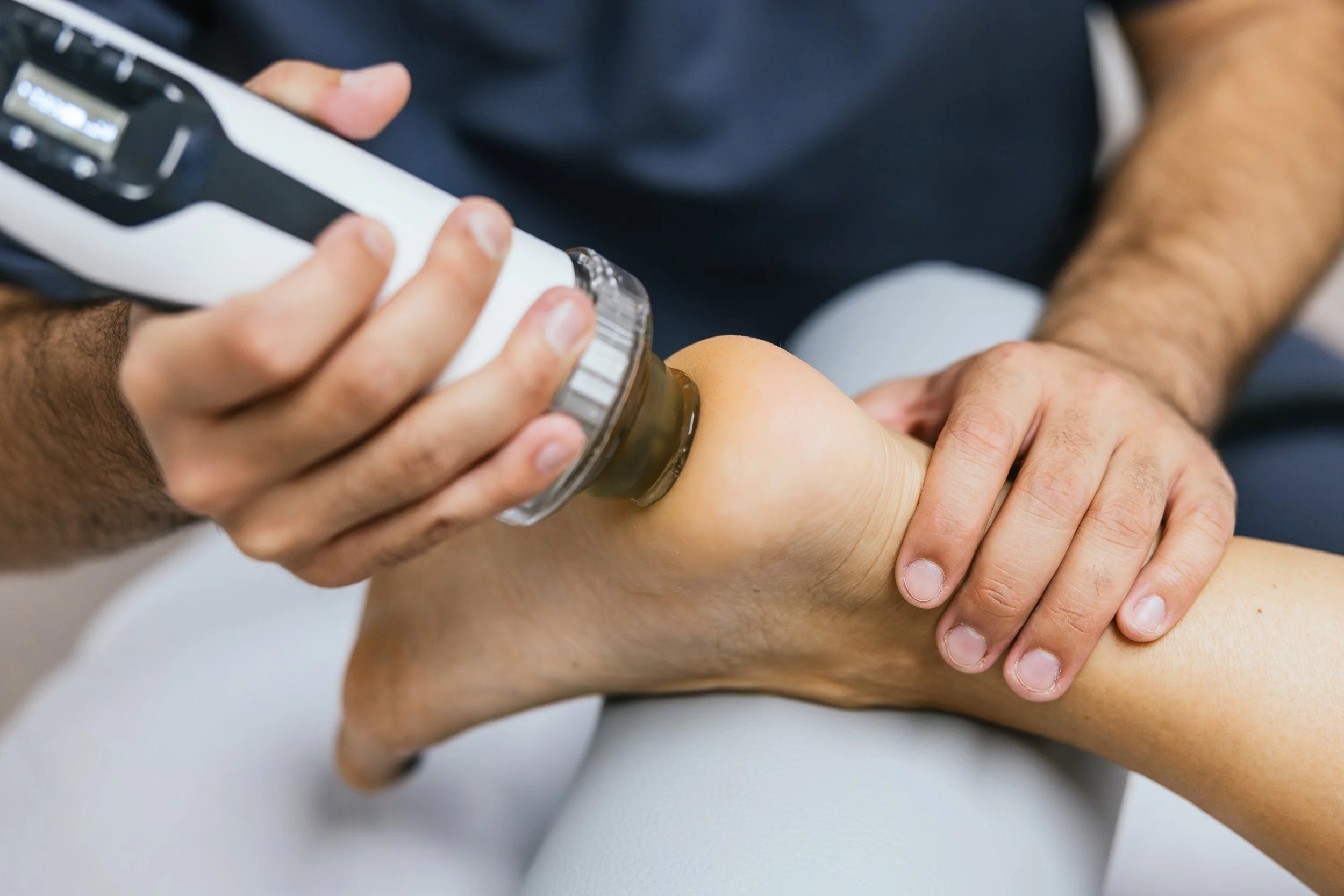
Our Approach: Restore Tendon Capacity — Not Just Reduce Pain
Most treatments focus on reducing pain.
We focus on restoring your tendon’s ability to handle load, so you can return to running without the pain coming back.
1. Precision Diagnosis
We identify exactly which tendon is involved—and why it’s failing under load.
detailed clinical exam
diagnostic ultrasound when needed
identify the specific load failure
2. Regenerative Therapy
We use targeted therapies to stimulate healing and accelerate recovery:
focused shockwave + radial pressure wave therapy→ mechanical stimulation
EMTT → cellular and metabolic support
laser therapy → recovery and inflammation modulation
3. Load-Based Rehabilitation
This is where most treatments fall short.
We progressively rebuild the tendon’s capacity to tolerate load:
structured tendon loading
mobility + control (FRC principles)
strength through usable ranges
4. Return-to-Run Strategy
Getting out of pain is only step one.
We guide you back to running safely:
graded exposure to impact
workload progression
gait and loading adjustments if needed
Why This Matters
Returning to running too quickly is one of the most common reasons ankle pain comes back.
A structured return-to-run plan ensures your tendon adapts safely to increasing load and intensity.
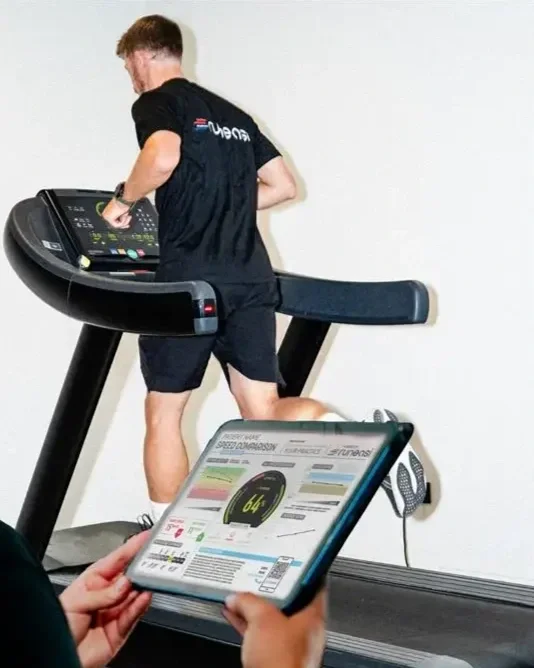
Return-to-Running Strategy and Load Progression
Getting out of pain is only part of recovery.
To stay pain-free, your tendon needs to adapt to the demands of running again.
We guide you through a structured return-to-run process that builds load safely and progressively.
graded exposure to impact
progression of volume and intensity
adjustments to stride, cadence, and mechanics when needed
Biomechanical running analysis and individualized coaching may be incorporated to improve efficiency and reduce reinjury risk.
👉 Explore our running gait analysis and performance coaching services
Frequently Asked Questions About Ankle Pain, Recovery, and Treatment
-
Ankle pain when running is usually caused by repetitive load exceeding the tendon’s capacity.
This happens when the tendon is not strong enough to handle the demands of running.Common causes include:
rapid increases in mileage or intensity
poor load distribution or mechanics
limited ankle mobility or stability
Long-term recovery requires restoring the tendon’s ability to handle load—not just reducing symptoms.
-
Sometimes symptoms improve with rest—but that doesn’t mean the problem is resolved.
If the tendon’s load capacity isn’t restored, the pain often returns once you resume running or increase activity.
True recovery requires progressive loading, strength development, and improved movement control so the tendon can tolerate stress again.
-
In many cases, you can continue running with ankle tendon pain if the load is properly managed.
Complete rest is not always necessary, but running without a plan can worsen symptoms.Safe running depends on:
pain level and irritability
the tendon involved
how load is modified
A structured approach allows activity while rebuilding tolerance.
-
Ankle pain keeps coming back when the tendon’s load capacity hasn’t been fully restored.
Symptoms may improve temporarily, but if strength, stability, and loading tolerance aren’t rebuilt, the tendon is re-stressed when you return to activity.Common reasons include:
returning to running too quickly
lack of progressive strengthening
unresolved movement or load issues
-
Yes—shockwave therapy can be very effective when used as part of a structured plan.
It helps:
stimulate tissue healing
improve blood flow
reduce pain sensitivity
However, it works best when combined with progressive loading and rehabilitation.
On its own, it may reduce symptoms—but pairing it with the right rehab is what leads to lasting results. -
Each part of treatment targets a different layer of recovery:
shockwave therapy → mechanical stimulation of the tendon
EMTT → cellular and metabolic support
laser therapy → tissue response and inflammation modulation
rehabilitation → restores strength and load capacity
Used together, they create a more complete approach—reducing pain while rebuilding the tendon’s ability to handle load.
-
Most cases of ankle tendon pain improve within 4 to 8 weeks with appropriate treatment.
Recovery time depends on severity, how long symptoms have been present, and how the tendon is reloaded.Faster recovery is more likely when:
load is progressed gradually
strength and stability are restored
return to activity is structured
Without proper rehabilitation, symptoms may persist or return.
-
Yes—especially if left untreated.
For example, dysfunction of the posterior tibial tendon can lead to:
loss of arch support
reduced foot stability
gradual structural changes over time
Addressing the problem early helps prevent these longer-term issues.
-
Yes.
If the tendon continues to be overloaded without adequate strength and control, it can lead to:
chronic ankle instability
persistent irritation
increased risk of strain or tearing
This is more likely in runners who continue training without restoring proper load capacity.
-
Yes—and it often does.
Recurrence is common when:
pain is reduced, but strength isn’t restored
the tendon isn’t prepared for increasing training load
return to running happens too quickly
To prevent recurrence, the focus has to be on rebuilding tendon capacity—not just reducing symptoms.
-
Our approach focuses on why the tendon is failing under load—not just where it hurts.
Rather than relying only on symptom relief or passive treatments, we:
identify the exact tendon involved
determine the specific load issue
combine regenerative therapies with progressive rehabilitation
guide a structured return to running
The goal is not just to reduce pain—but to restore function and prevent it from coming back.
We also coordinate referral to podiatry or orthopedics when surgical or structural management is indicated.
-
Imaging isn’t always required.
In many cases, a detailed clinical exam is enough to identify the involved tendon and guide treatment.
However, imaging may be useful when:
the diagnosis is unclear
symptoms aren’t improving as expected
there’s concern for a tear, bone stress injury, or another condition
When needed, we use in-house Clarius MSK diagnostic ultrasound to evaluate the tendon in real time.
This allows us to:
confirm the exact structure involved
assess tendon integrity and irritation
guide treatment decisions with greater precision
Because it’s performed in the clinic, it helps avoid delays and ensures your treatment plan is based on accurate, immediate findings.
Don’t Let Ankle Tendon Pain Keep You From Running
Ankle tendon pain doesn’t just limit movement—it limits how consistently and confidently you can train.
If the underlying issues aren’t addressed, the pain often returns when you increase mileage or intensity.
We focus on restoring tendon strength, stability, and load capacity so you can return to running without setbacks.
Get a clear diagnosis and a structured plan built around how your body responds to load.