
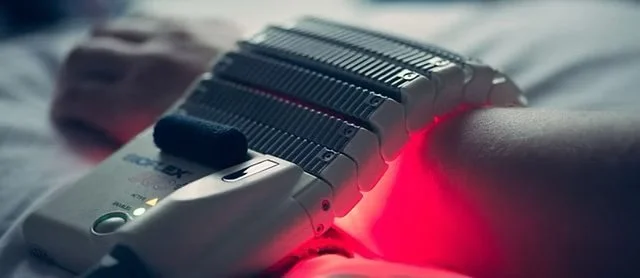
Laser Therapy in Brooklyn (Photobiomodulation Therapy)
What Is Laser Therapy?
If you’re searching for laser therapy in Brooklyn, you may be looking for a non-surgical treatment option for pain, inflammation, nerve irritation, or soft tissue injury.
At Form & Function Chiropractic, laser therapy refers to photobiomodulation therapy (PBMT) using the Meditech Bioflex Laser system. Photobiomodulation, also called low-level laser therapy (LLLT), uses specific wavelengths of light to interact with tissues in a nonthermal way and support biological activity involved in pain modulation and tissue recovery.
Unlike surgical lasers, photobiomodulation therapy is used to support musculoskeletal care without cutting, burning, or invasive procedures. Evidence reviews describe PBMT / LLLT as a noninvasive approach that may help with pain, inflammation, and tissue healing, although results depend on the condition being treated and the treatment parameters used.
At Form & Function Chiropractic, laser therapy is incorporated into a precision multimodal regenerative approach that may also include Clarius MSKdiagnostic ultrasound, extracorporeal shockwave therapy, EMTT, spinal decompression when indicated, manual chiropractic care, and progressive rehabilitation.
How Photobiomodulation Therapy Works
Photobiomodulation therapy uses targeted light energy to influence cellular activity. Evidence reviews commonly describe this as a photochemical, nonthermal effect rather than a heat-based treatment. Proposed effects include support for cellular energy production, pain modulation, circulation, and tissue response.
In practical terms, laser therapy is used to help create a more favorable biological environment for recovery in tissues that are painful, overloaded, inflamed, or slow to calm down.

How Meditech Bioflex Photobiomodulation Therapy Works
At Form & Function Chiropractic, photobiomodulation therapy is delivered using the Meditech Bioflex Laser system, which utilizes both red light and near-infrared wavelengths.
Red light wavelengths are commonly used to support more superficial tissues, while near-infrared wavelengths are able to penetrate deeper structures such as muscles, tendons, and joints.
These light energies are delivered through a combination of low-level lasers and LED arrays, allowing treatment to influence both localized tissue injury and broader regional circulation.
Photobiomodulation therapy works through non-thermal photochemical mechanisms, meaning the goal is not to heat tissue but to influence cellular metabolism, inflammatory signaling, and tissue repair responses.
When integrated into a precision multimodal treatment strategy alongside extracorporeal shockwave therapy, EMTT, spinal decompression when indicated, and progressive rehabilitation, photobiomodulation therapy supports recovery from a wide range of musculoskeletal conditions.
Conditions That May Benefit from Laser Therapy
Laser therapy may be incorporated into treatment plans for:
tendon pain and tendinopathy
muscle strains
ligament injuries
joint irritation and stiffness
nerve-related pain patterns
back and neck pain
sports injuries
overuse injuries
persistent inflammatory conditions
Because each injury is different, laser therapy is most effective when integrated into a targeted treatment strategy rather than used as a standalone intervention.
Laser Therapy vs Consumer Red Light Therapy
Patients often confuse clinical laser therapy with consumer red light devices.
Clinical Photobiomodulation Therapy
medical-grade equipment
targeted dosing and tissue selection
integrated into diagnosis-driven treatment plans
used for musculoskeletal injury and pain care
Consumer Red Light Therapy
generalized wellness or cosmetic use
variable device quality and treatment parameters
not typically integrated into injury rehabilitation programs
Clinical photobiomodulation therapy focuses on precise tissue targeting and functional recovery.
Precision Multimodal Regenerative Treatment in Brooklyn
At Form & Function Chiropractic, laser therapy is incorporated into a precision multimodal regenerative approach designed to address both tissue biology and biomechanics.
Photobiomodulation Therapy (Meditech Bioflex Laser)
Laser therapy may be used to support tissue recovery, reduce inflammatory responses, improve circulation, and help modulate pain sensitivity in injured or overloaded tissues.
Extracorporeal Shockwave Therapy
Shockwave therapy may be used to deliver controlled mechanical stimulation to chronic tendon, muscle, and connective tissue injuries that require improved biological responsiveness.
EMTT (Extracorporeal Magnetotransduction Therapy)
EMTT is integrated into regenerative protocols to support cellular metabolism and complement mechanical stimulation strategies.
Spinal Decompression Therapy
When spinal disc or nerve-related conditions are involved, decompression therapy may be incorporated to improve the mechanical environment around irritated tissues.
Manual Chiropractic Care and Rehabilitation
All regenerative technologies are combined with:
mobility restoration
progressive strengthening
movement retraining
load management
return-to-activity planning
This integrated approach helps support long-term functional recovery rather than temporary symptom relief.
The Role of Diagnostic Ultrasound
Treatment begins with identifying the specific tissue structures contributing to pain.
When clinically indicated, Clarius MSK diagnostic ultrasound may be used to visualize tendons, muscles, ligaments, and other soft tissues in real time. This allows treatment strategies — including laser therapy — to be better targeted to the involved structures.
Why Patients Choose Laser Therapy
Patients often seek laser therapy because it is:
non-invasive
comfortable for many individuals
adaptable to many musculoskeletal conditions
easily combined with other regenerative therapies
supportive of rehabilitation and return to activity
Appropriateness depends on diagnosis, tissue involvement, and overall treatment goals.
When Should You Consider Laser Therapy?
You may benefit from evaluation if you experience:
persistent pain or inflammation
tendon or muscle injuries
nerve irritation
joint stiffness
sports-related overuse injuries
symptoms that have not improved with rest alone
A structured evaluation helps determine whether photobiomodulation therapy should be included in your care plan.
Related Services and Conditions
Laser therapy may be used alongside other modalities—shockwave therapy, EMTT, spinal decompression & diagnostic ultrasound for:
sports injuries
nerve irritation
Frequently Asked Questions About lser Therapy
-
Laser therapy, also known as photobiomodulation therapy (PBMT), uses specific wavelengths of light to stimulate cellular activity in injured or irritated tissue. This process may help reduce pain sensitivity, improve circulation, and support biological recovery processes in muscles, tendons, joints, and nerves
-
Laser therapy may be used for a range of musculoskeletal conditions including tendon injuries, joint irritation, nerve-related pain, muscle strains, overuse injuries, plantar fasciitis, shoulder pain, knee pain, neck pain, and low back pain. It is typically most effective when combined with rehabilitation strategies and load management.
-
Photobiomodulation therapy may help reduce inflammatory activity and modulate pain signals in certain conditions. Many patients experience gradual improvement in symptoms when treatment is integrated into a structured recovery plan that addresses both tissue healing and functional movement.
-
Treatment frequency depends on the condition being treated, symptom duration, and rehabilitation goals. Some patients notice early symptom changes, while chronic conditions often require a series of treatments delivered over several weeks.
-
Laser therapy, shockwave therapy, and Extracorporeal Magnetotransduction Therapy (EMTT) are different types of regenerative treatments that are used for different clinical purposes rather than being direct replacements for one another.
Laser therapy (photobiomodulation therapy) primarily supports pain modulation, circulation, and cellular metabolic activity similar to EMTT. It is often used to help calm irritated or inflamed tissue and may be especially useful in the earlier or more sensitive stages of injury.
Shockwave therapy (EPAT or focused ESWT) and EMTT deliver higher-energy mechanical or electromagnetic stimulation that can more directly influence tissue remodeling and healing responses in chronic tendon injuries, degenerative conditions, and long-standing musculoskeletal pain.
Because these therapies affect tissue recovery through different physiological mechanisms, they are frequently combined within a structured regenerative treatment plan. The most appropriate approach depends on the diagnosis, stage of injury, tissue tolerance, and functional goals.
-
Laser therapy is non-invasive and typically painless. Most patients feel little to no discomfort during treatment, though sensations can vary depending on tissue sensitivity and the area being treated.
-
Response timelines vary based on the condition, severity, and overall treatment approach. Some patients notice symptom changes early in care, while others improve gradually as tissue healing and functional progression occur.
-
Laser therapy is a non-invasive treatment commonly used in sports medicine and rehabilitation settings. It is generally well tolerated and does not involve injections or surgical procedures. Most patients do not experience any discomfort.
As with any medical treatment, appropriateness depends on individual health history, diagnosis, and treatment goals. Laser therapy is typically avoided or modified in certain situations, such as during pregnancy when treating over the abdomen or lower back, or when there is a known or suspected malignancy in the treatment area.
A clinical evaluation helps determine whether laser therapy is appropriate and how it should be incorporated into a personalized treatment plan.
-
Not always. Many musculoskeletal conditions can be evaluated clinically. When necessary, diagnostic ultrasound or referral for advanced imaging may be recommended to guide treatment decisions.
-
In many cases, patients can continue modified running or exercise while undergoing laser therapy, provided the activity is not significantly increasing pain, worsening symptoms, or delaying tissue recovery. Training volume, intensity, or frequency may be temporarily adjusted to support healing.
For runners and active individuals, a structured running analysis or movement assessment may be recommended to help identify biomechanical or loading factors that contributed to the injury. Addressing these factors can support tissue recovery and help guide a safer progression back to full training.
Return-to-activity decisions are based on symptom response, tissue tolerance, and overall rehabilitation goals.
Take the Next Step Toward Pain Relief
If pain or injury is limiting your training or daily activity, schedule an evaluation at Form & Function Chiropractic.
Treatment may include photobiomodulation therapy integrated with shockwave therapy, EMTT, rehabilitation, and biomechanical correction to help you return to activity with greater confidence and resilience.