Biceps Tendinopathy Treatment in Brooklyn | Anterior Shoulder Pain
If you’re searching for treatment for biceps tendinitis pain in Brooklyn, you may be experiencing discomfort in the front of the shoulder that worsens with lifting, reaching, or overhead activity.
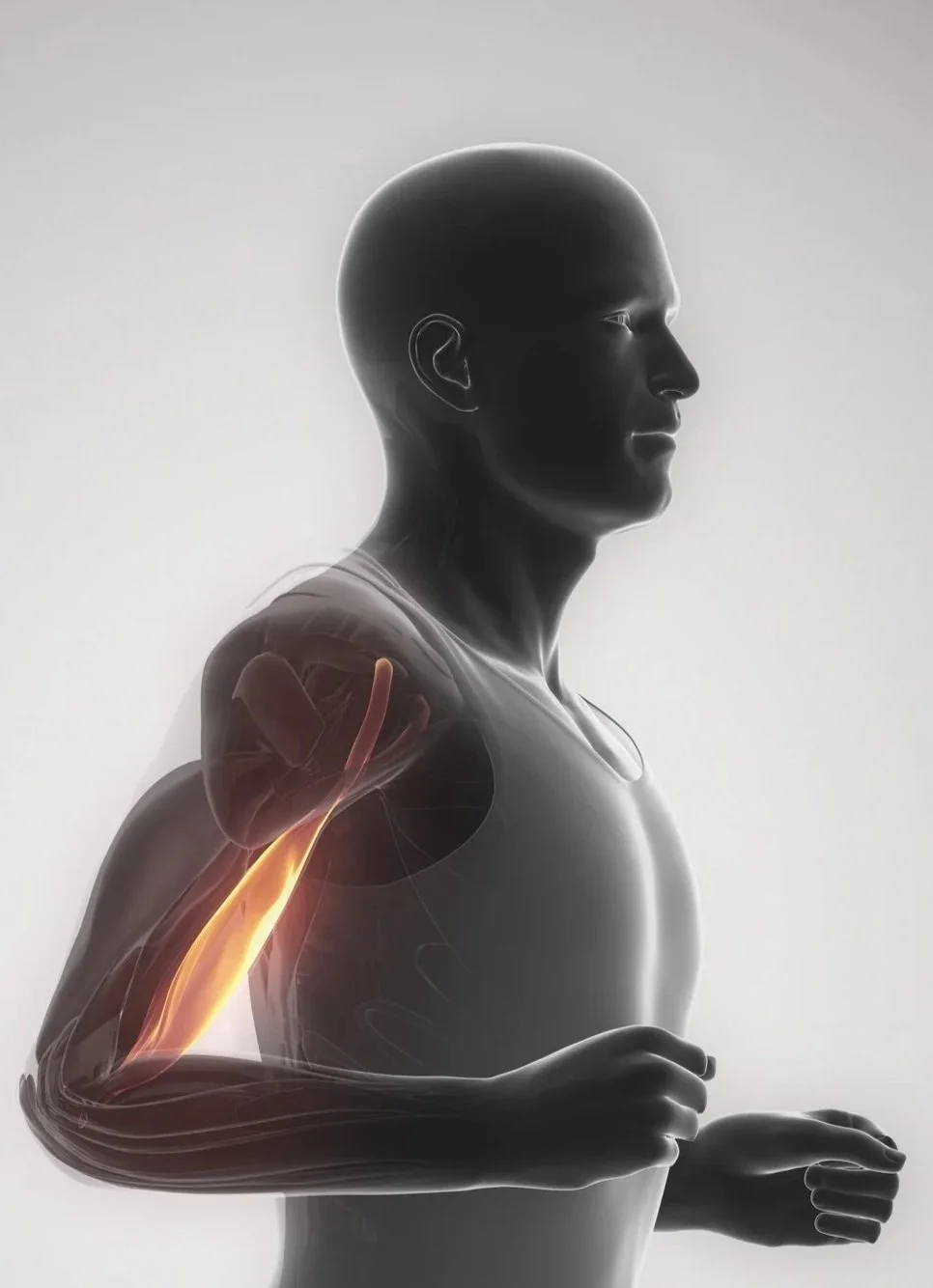
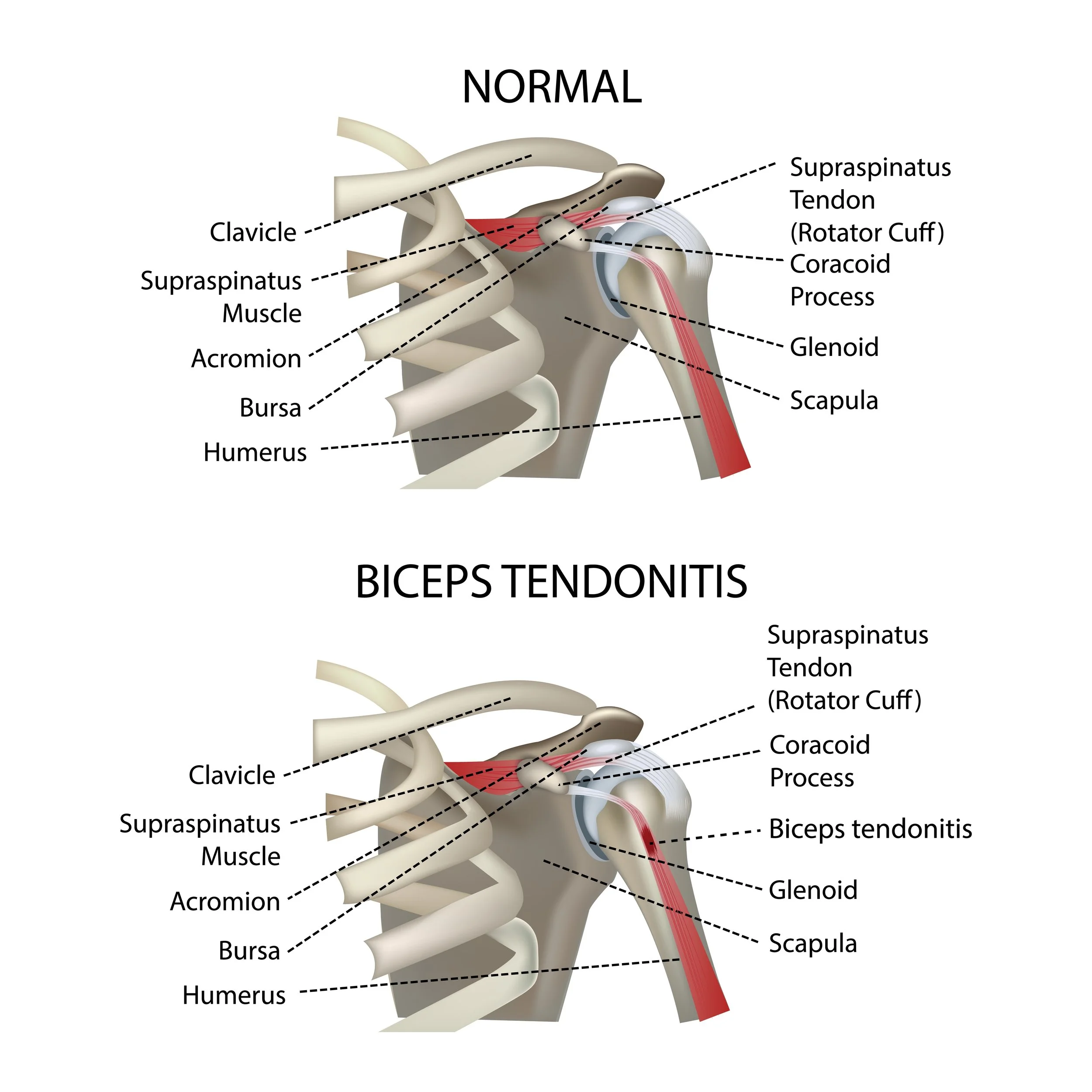
Biceps tendinopathy involves degeneration or overload of the long head of the biceps tendon, which runs through the front of the shoulder joint. This tendon plays an important role in shoulder stabilization and is commonly irritated alongside rotator cuff dysfunction or shoulder impingement.
At Form & Function Chiropractic, we evaluate anterior shoulder pain carefully to determine whether symptoms originate from the biceps tendon, rotator cuff, or surrounding structures. When appropriate, we provide non-surgical treatment using a precision multimodal shockwave therapy and EMTT approach designed to restore tendon capacity and improve shoulder function.
What Is Biceps Tendonitis (Biceps Tendinopathy)?
The long head of the biceps tendon travels through the bicipital groove at the front of the shoulder and attaches within the shoulder joint.
Biceps tendinopathy occurs when repetitive loading exceeds the tendon’s ability to recover.
This may result in:
Tendon degeneration
Micro-tearing
Pain and reduced load tolerance
The condition often develops gradually rather than from a single traumatic event.
Symptoms of Biceps Tendon Pain
Common symptoms include:
Pain in the front of the shoulder
Tenderness over the bicipital groove
Pain lifting objects
Discomfort with overhead activity
Pain during resisted elbow flexion
Clicking or snapping in the shoulder
Symptoms may worsen with repetitive lifting, throwing, or pressing movements.

Biceps Tendinopathy vs Rotator Cuff Injury
Anterior shoulder pain can involve multiple structures.
Biceps Tendinopathy
Pain localized to the front of the shoulder
Tender over the bicipital groove
Pain with resisted elbow flexion
Often associated with shoulder instability or impingement
Rotator Cuff Tendinopathy or Tear
Pain with overhead motion
Weakness raising the arm
Pain along the lateral shoulder
Painful arc of movement
Accurate diagnosis ensures treatment targets the correct structure.
Biceps Tendinopathy vs Shoulder Impingement
Biceps tendon irritation often occurs alongside shoulder impingement.
Biceps Tendoninopathy
Localized anterior shoulder pain
Tenderness along the biceps tendon
Pain with resisted elbow flexion
Shoulder Impingement
Pain during overhead movement
Compression of rotator cuff tendons
Painful arc between 60–120 degrees of elevation
Clinical evaluation helps determine the primary pain generator.
Precision Multimodal Regenerative Treatment in Brooklyn
At Form & Function Chiropractic, we utilize a precision, multimodal regenerative strategy tailored to the stage and severity of biceps tendinopathy.
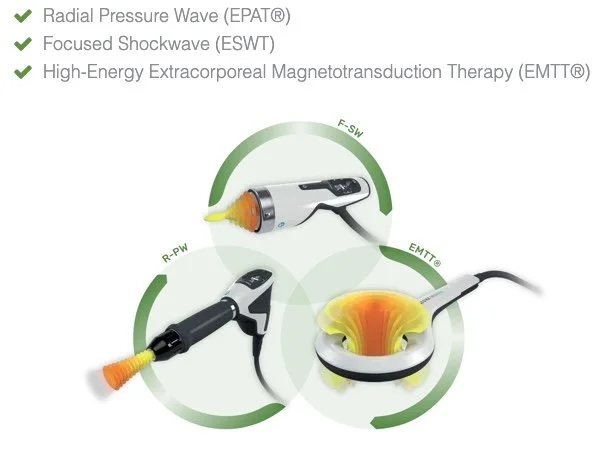
Focused Extracorporeal Shockwave Therapy (ESWT)
Focused ESWT delivers controlled mechanical stimulation to the degenerative biceps tendon. This promotes biological signaling, supports tendon remodeling, and improves load tolerance in chronic cases.
Radial Shockwave (EPAT®)
Radial shockwave addresses surrounding shoulder and upper-arm tissue overload and enhances regional tissue responsiveness.
EMTT (Extracorporeal Magnetotransduction Therapy)
EMTT is integrated into every regenerative protocol to enhance cellular metabolism and complement mechanical stimulation. When combined with progressive rehabilitation, it reinforces the biological environment necessary for recovery.
Structured Shoulder Rehabilitation
Regenerative therapies are paired with:
Rotator cuff strengthening
Scapular stabilization
Progressive loading strategies
Gradual return to overhead activity
This integrated approach targets both tissue biology and biomechanical contributors to anterior shoulder pain.
When Imaging Is Necessary
Most cases of biceps tendinopathy can be diagnosed clinically.
Imaging may be recommended when:
A tendon rupture is suspected
Significant weakness is present
Symptoms fail to improve
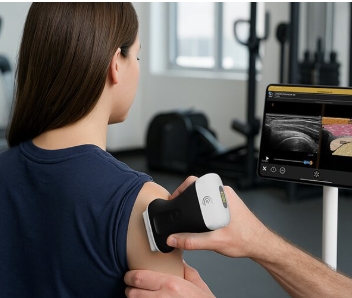
At Form & Function Chiropractic, we utilize in-house Clarius MSK diagnostic ultrasound when indicated to assess tendon structure and identify degenerative changes or partial tearing. If advanced imaging such as MRI is necessary, referral is coordinated appropriately.
Why Biceps Tendinopathy Develops
Common contributing factors include:
Shoulder impingement
Repetitive overhead activity
Sudden increase in training load
Poor scapular stability
Previous shoulder injury
Addressing these underlying factors is essential for long-term recovery.
Related Shoulder Conditions
Anterior shoulder pain may also involve:
Frozen shoulder
Shoulder impingement
Labral irritation
A comprehensive evaluation ensures the correct structure is treated.
Who Should Seek Evaluation?
You should seek evaluation if you experience:
Persistent front-of-shoulder pain
Pain lifting or reaching overhead
Tenderness along the biceps tendon
Pain with pressing or pulling exercises
Symptoms lasting more than several weeks
Early treatment improves recovery and reduces the risk of tendon rupture.