

VO₂ Max & Metabolic Testing in Brooklyn
PNOĒ Performance Testing for Precision Training & Recovery
Measure your VO₂ max, metabolism, and performance with lab-grade precision.
VO₂ max and metabolic testing provide objective data on how your body uses oxygen and fuel during exercise and at rest. Using the PNOĒ metabolic analyzer, testing delivers precise insights into aerobic capacity, fat and carbohydrate utilization, and energy expenditure.
This data allows for more accurate training, improved endurance, and smarter recovery strategies.
Lab-grade metabolic testing
Personalized training insights
Used by runners and active adults
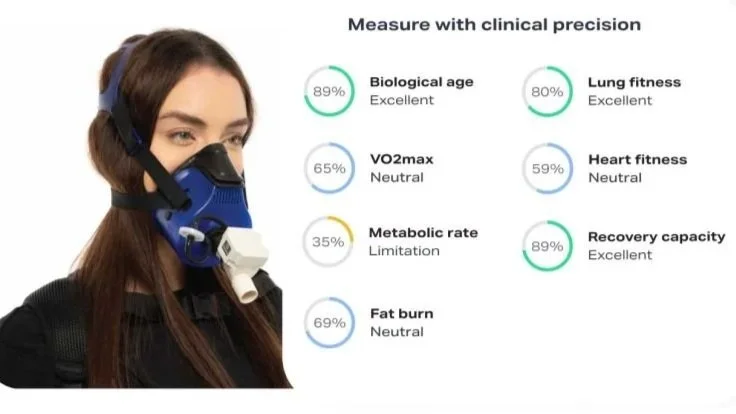
WHAT IT MEASURES
✔ VO₂ max (aerobic capacity)
✔ Resting metabolic rate (RMR)
✔Fat and carbohydrate utilization
✔ Ventilatory thresholds (VT1 & VT2)
✔ Personalized training zones
All measurements are collected using the PNOĒ breath-by-breath metabolic analyzer for clinical-grade accuracy.
WHO IT’S FOR
✔ Runners and endurance athletes
✔ Athletes and individuals looking to improve performance
✔ Fat loss and body composition goals
✔ Plateaued progress or stalled training
✔ Data-driven training and performance optimization
WHY IT MATTERS
Most training programs rely on estimates.
Metabolic testing removes guesswork by providing individualized data on how your body performs, fuels, and recovers — allowing for precise training zones, improved efficiency, and better long-term results.
Train with data. Adapt with precision. Perform at a higher level.
What Your Results Mean
Your VO₂ max and metabolic data don’t just give numbers — they show how your body performs, fuels, and adapts under load.
Here’s how to interpret what matters most:
VO₂ Max (Aerobic Capacity)
Your VO₂ max reflects how efficiently your body delivers and uses oxygen during exercise.
Higher values = greater endurance potential
Lower values = limited aerobic capacity
This directly impacts pace, fatigue resistance, and performance ceiling
It is also one of the strongest predictors of cardiovascular health and longevity

How to Interpret Your Metabolic Test

Your results go beyond a single number — they show how your body produces energy, handles intensity, and adapts to training.
VO₂ max reflects your overall aerobic capacity and endurance potential. Higher values support faster pacing, improved fatigue resistance, and a higher performance ceiling. It is also one of the strongest predictors of cardiovascular health and longevity.
Your ventilatory thresholds (VT1 and VT2) define how your body responds to increasing intensity. These markers determine your true training zones — not estimated ones — allowing you to train at the right intensity for endurance, speed, or recovery.
Fuel utilization reveals whether your body prefers fat or carbohydrates at different intensities. Efficient fat metabolism supports endurance and metabolic health, while early carbohydrate reliance can lead to quicker fatigue if not properly trained.
Resting metabolic rate (RMR) provides insight into how many calories your body requires at baseline, helping guide nutrition, recovery, and fat loss strategies.
Together, these metrics allow for precise, individualized training — eliminating guesswork and replacing it with data-driven progression.
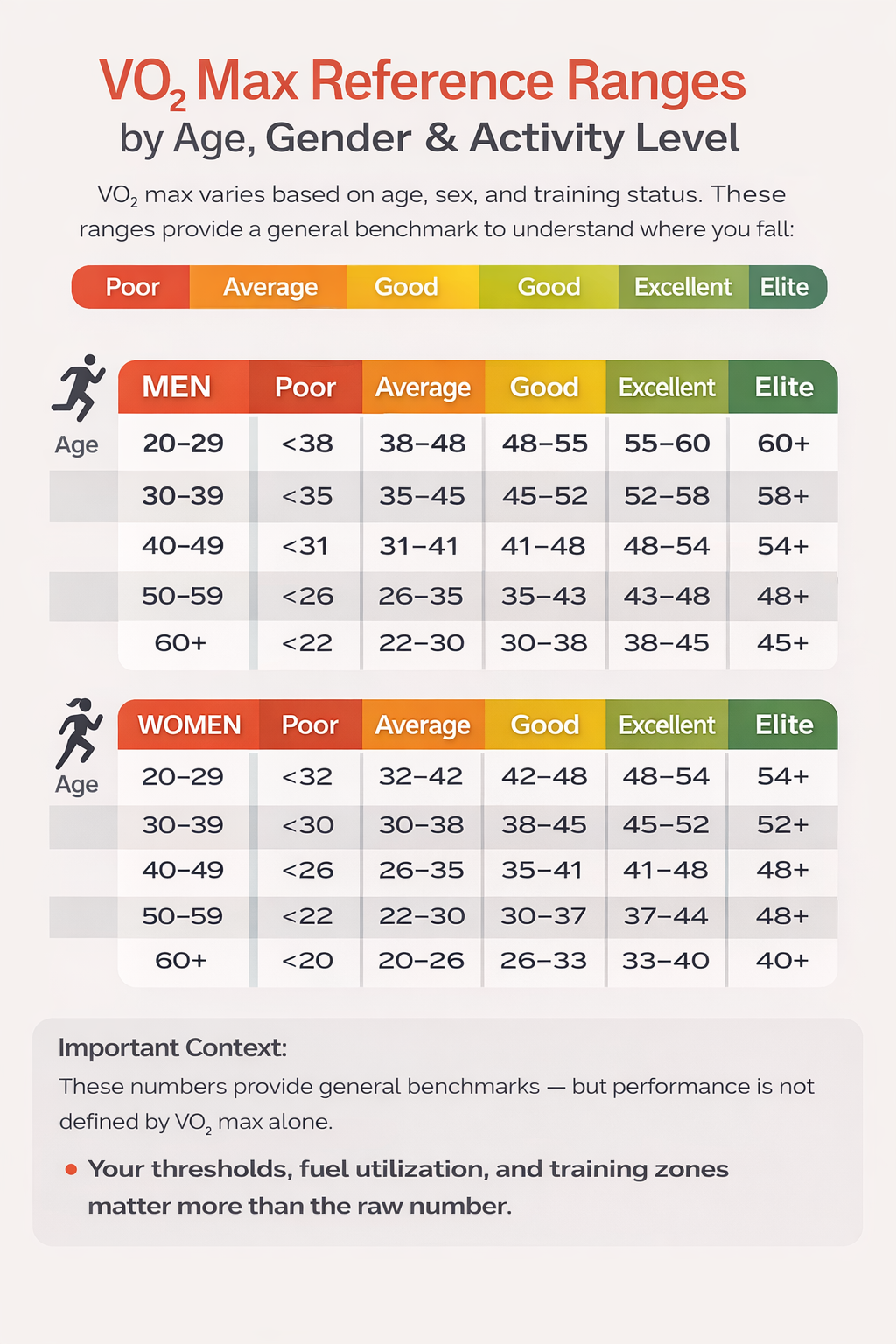
VO₂ max varies based on age, sex, and training status. These ranges provide a general benchmark to understand where you fall:
Important Context
These numbers provide general benchmarks — but performance is not defined by VO₂ max alone.
Your thresholds, fuel utilization, and training zones matter more than the raw number.
VO₂ Max Reference Ranges by Age, Gender & Activity Level
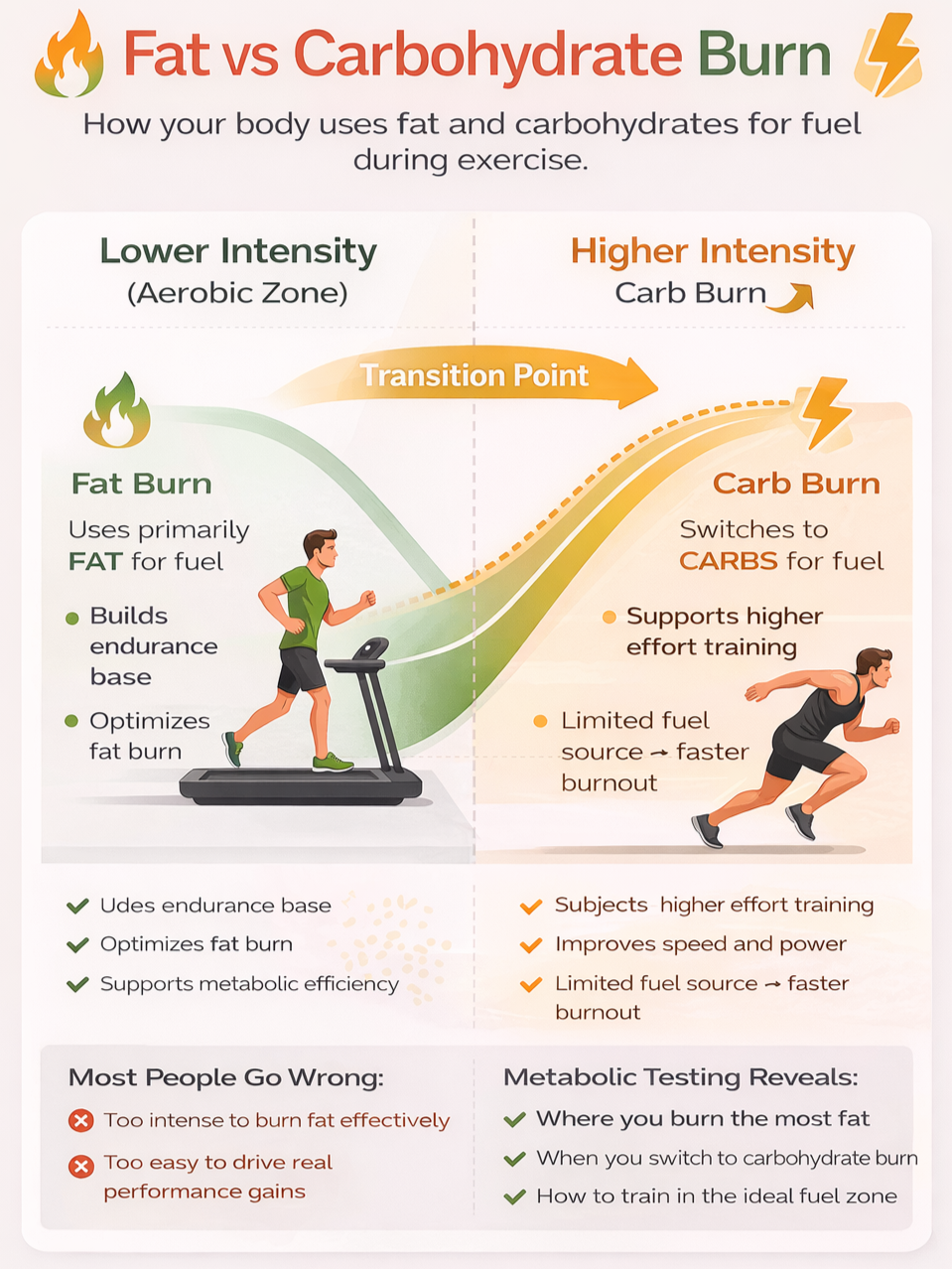
Fat vs Carbohydrate Utilization
Your metabolic test shows how your body uses fuel across different intensities.
Lower Intensities (Aerobic Zone)
Your body relies more on fat as a primary fuel source
✔ supports endurance
✔ improves metabolic efficiency
✔ enhances fat loss
Higher Intensities
Your body shifts toward carbohydrates
✔ supports speed and power
✔ necessary for higher effort training
✔ limited fuel source → faster fatigue if mismanaged
Where Most People Go Wrong
Many people train in the wrong zone:
❌ too intense to build aerobic efficiency
❌ too easy to improve performance
What Your Test Reveals
✔ where you burn the most fat
✔ when you switch to carbohydrate dominance
✔ how to train based on your physiology
Train in the right zone — not just harder.
FAQ’S About VO₂ MAX + METABOLIC TESTING
-
VO₂ max measures how efficiently your body uses oxygen during exercise and is a key indicator of aerobic fitness and endurance capacity.
Higher VO₂ max values are associated with improved performance, better fatigue resistance, and are strongly linked to cardiovascular health and longevity.
-
Wearables estimate VO₂ max using algorithms based on heart rate and activity data.
PNOĒ testing directly measures your breathing and gas exchange breath-by-breath, providing lab-grade accuracy and insights into metabolism, fuel usage, and performance thresholds.
This allows for precise, individualized training — not estimates.
-
Your test provides detailed data on:
✔ VO₂ max (aerobic capacity)
✔ Ventilatory thresholds (true training zones)
✔ Fat vs carbohydrate utilization
✔ Resting metabolic rate (RMR)This allows us to build a personalized strategy for performance, fat loss, and recovery.
-
We translate your data into:
✔ individualized training zones
✔ structured return-to-run or performance plans
✔ targeted conditioning and recovery strategiesThe goal is simple: train smarter, not just harder.
-
Yes — and more effectively than guess-based training.
Your results show exactly where your body burns the most fat and how your metabolism responds to different intensities, allowing for more efficient fat loss and better long-term results.
For individuals using GLP-1 medications, metabolic testing can help guide training intensity and preserve lean muscle while optimizing fat loss.
-
No.
While runners and endurance athletes benefit greatly, metabolic testing is also valuable for:
✔ active adults
✔ individuals struggling with weight loss
✔ anyone looking to improve energy, fitness, and metabolic health -
Testing time depends on what is being performed:
Resting Metabolic Rate (RMR): ~10 minutes
VO₂ Max / Performance Testing: ~30–45 minutes
This includes setup, calibration, and data collection.
After testing, your results are reviewed and explained so you understand exactly how to apply them to your training, recovery, or nutrition.
-
You’ll be able to apply your results immediately.
Because your training zones, intensity, and fueling are now based on your actual physiology — not estimates — most people notice improvements in efficiency, pacing, and fatigue within 2–4 weeks.
Performance gains such as increased endurance, better recovery, and improved body composition typically develop over 6–12 weeks, depending on consistency and training quality.
-
Yes — proper preparation ensures accurate results:
Avoid intense exercise for 24 hours prior
Fast for at least 3 hours before testing (no food or caffeine)
Stay well hydrated
You’ll receive full preparation guidelines before your appointment to ensure the most accurate and meaningful data.
-
Most individuals benefit from retesting every 12-16 weeks to track progress and adjust training zones as fitness improves.
Stop Guessing. Start Training With Data.
Your metabolic test provides clear, individualized insights into how your body performs, fuels, and recovers — so you can train smarter and see real progress.
📍 Brooklyn
📞 718.435.0471